
The Killing Wound: For the Unknown Gladiators
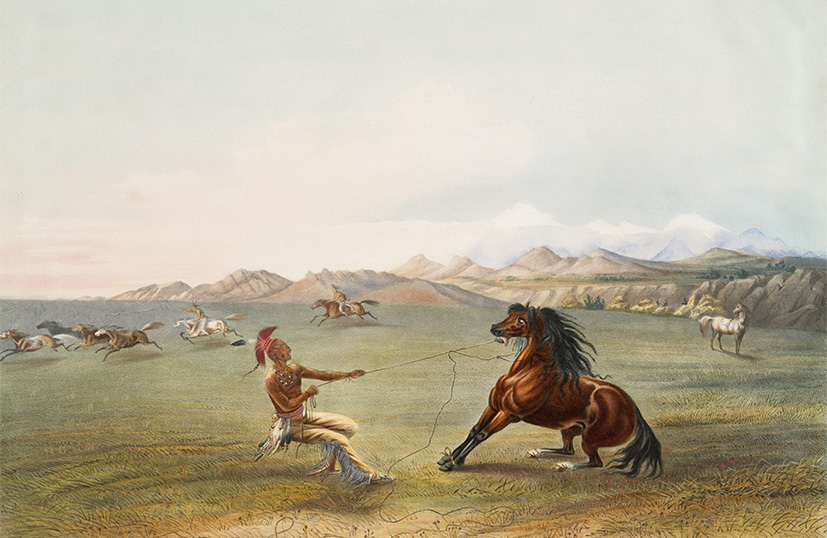 Image courtesy of the New York Public Library
I thought nothing of the exhumed skeletons of the gladiators at first—how they’d been pulled from the earth’s womb and sifted from the bones of horses, tangled with the vertebrate of their fellow fighters. It wasn’t the fact that their very discarded remains were a rarity—that it meant they’d been spared the fire that had eaten most of their brethren.
None of it had reminded me of you, at first. Nor had it been the history that I’d surely recognized in your face, how the sun itself had poured into your copper curls, had limned your body in gold. Not even the lions—who, once again, have won this battle for fame centuries later—could persuade me to forget about you with the headline: BITES ON GLADIATORS PROVE COMBAT WITH LION.
This is a first in our history in proving what we’d suspected but could never find: a fighter and his skeleton, unscathed from the maw of both beast and time. Over twenty years later, he has come: a beige slip of pelvis bone pock-marked in an archaeologist’s gloved hand, butterflied open for the camera. The killing wound was easy to spot—the point of an incisor dipped into the hollow scoop of a bite. 3D scans and tooth analysis could prove it in its entirety, how the lion’s maw would’ve sunk into the bowl of his hip, its snaggle tooth catching the cradle of bone. The bite is aged around the time of death, big cats don’t normally attack there…he would’ve been dragged by his hip the archaeologists had explained, electric at this discovery.
Still, neither of this had brought you to mind—not until they’d described his other ordinary wounds, the maladies of the criminalized, the poor, the working class. He was between twenty-six and thirty, had tooth abscesses, slipped discs. It was the osteo-arthritis that did it; how his spine told the story of pain as he was pulled from young laborer, to criminal, to gladiator. That pelvis could’ve so easily been yours with the way I’d squeeze your limbs to chase the invisible pain eating you from the inside out. Your vanishing, Alejandro, was just the same as his—done to satiate olive branches that only knew how to orchestrate performed violence. That this century is no more immune from the hunger that makes lions and gladiators of all of us.
I know that your medication is getting harder to send by border, by train—that one day the pain will settle in to stay. For now, though, you have escaped the lion’s mouth. That unknown gladiator had likely been tired of the chase, too, could not fight off the ache in his bones that screamed for him to run. Though scars lined his legs, revealing fractures healed over time, he never once stopped. Unlike that unknown gladiator, they have not taken your head yet. If they do, then—as evidenced by excavation—you will at least be afforded the small mercy in resting with horses.
Brianna G. Reed is a student at the Institute of American Indian Arts.
Leave a Reply
You must be logged in to post a comment.